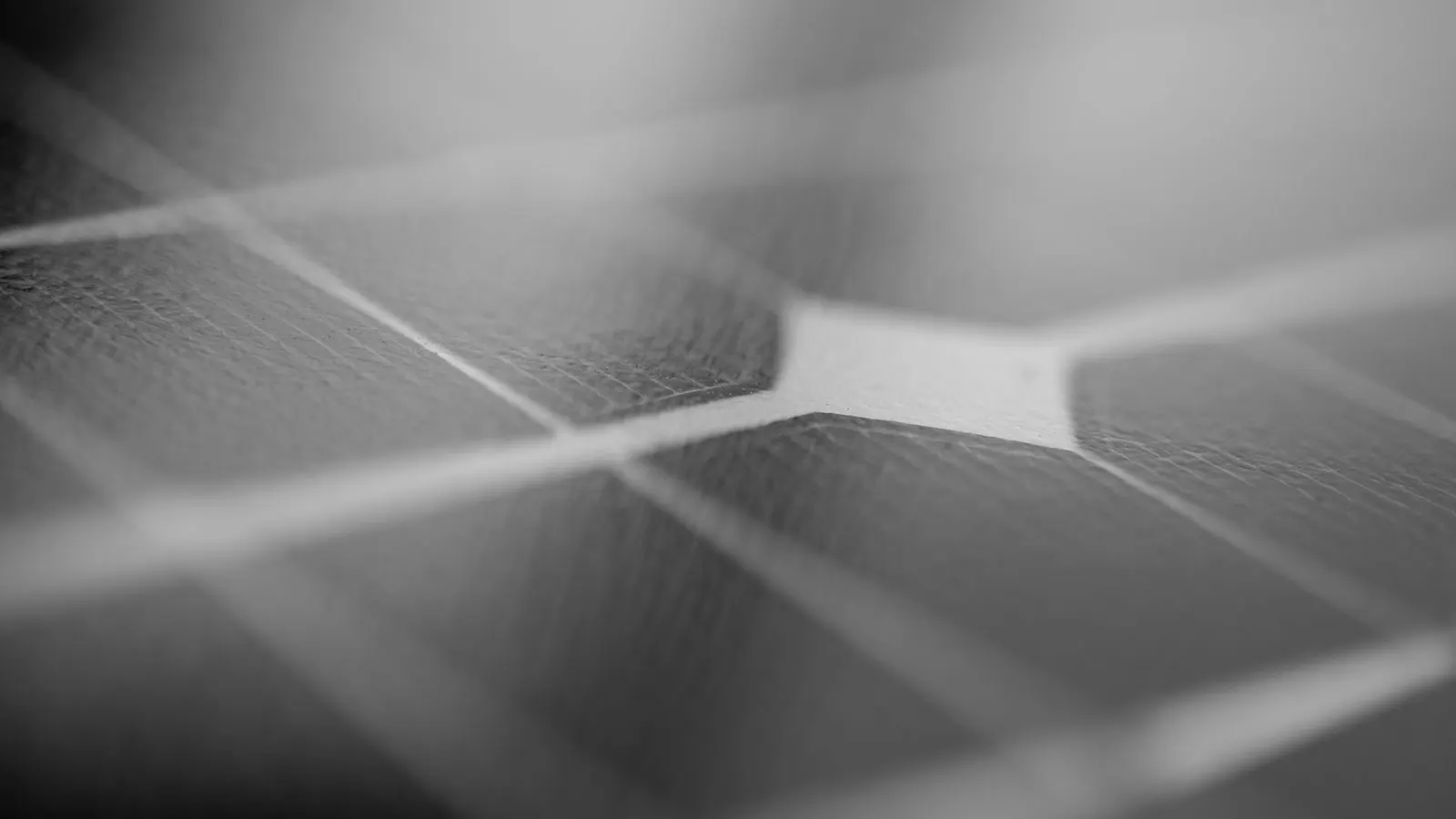
TOPCon technology modifies monocrystalline cells by adding a thin passivation layer on the backside to reduce recombination. This structure improves light trapping and current collection compared to earlier designs. The result is higher solar panel efficiency and more stable output from monocrystalline cells.
- TOPCon technology uses a thin silicon layer to passivate the rear of the cell.
- The design reduces electron recombination, increasing the current drawn by the panel.
- Sourcing decisions should focus on rear surface quality and cell uniformity.
- The structure works best when combined with low-resistivity substrates.
- Buyers should check datasheets for specific cell type and efficiency claims.
What is the basic structure of a TOPCon cell
TOPCon stands for Tunnel Oxide Passivated Contact. The name describes the physical layout inside a monocrystalline cell. A thin silicon layer sits on the rear side of the cell, separated from the main silicon bulk by an ultrathin oxide. This arrangement is a modification of the earlier passivated emitter and rear cell design.
The front side of the cell uses a standard emitter with a thin antireflection coating. The rear side, however, is where the distinction happens. Instead of a heavily doped contact that allows carriers to recombine as they return to the bulk, the TOPCon structure uses a lightly doped tunneling layer. This layer is thin enough to allow carriers to pass through via tunneling while blocking them from recombining directly on the rear surface.
The silicon used in these cells is monocrystalline. This means the wafer is cut from a single ingot rather than a polycrystalline ingot. The crystal lattice is uniform, which is a prerequisite for the high mobility of charge carriers required by this passivation scheme. If the crystal quality is poor, the passivation layer cannot fully suppress recombination, and the efficiency gains disappear.
How the operating principle reduces recombination
In any solar cell, the primary loss mechanism is recombination. This happens when a free electron and a free hole meet and annihilate, releasing energy as heat instead of electricity. There are three main types of recombination. Shockley-Read-Hall recombination occurs at defects in the crystal lattice. Surface recombination happens when charge carriers touch the metal contacts or the dielectric surfaces. Auger recombination occurs when a third carrier is involved in the interaction.
The TOPCon design targets surface recombination on the backside. The tunnel oxide layer acts as a barrier. It is so thin that carriers can tunnel through it quantum mechanically. This process is fast and does not require the carriers to lose energy to the lattice. By keeping the carriers away from the heavily doped rear contact area, the design significantly reduces the probability of them recombining.
The effect on solar panel efficiency is direct. When recombination is lower, the short-circuit current density increases. The cell generates more electrons per unit of incident light. The open-circuit voltage also improves because the minority carrier lifetime extends. These two factors, current and voltage, multiply to produce the power output. A TOPCon cell therefore yields more power from the same area of silicon compared to an unpassivated design.
Why monocrystalline substrates are required
The passivation mechanism relies on the high crystal quality of the silicon. Polycrystalline silicon contains many grain boundaries. These boundaries are defect sites where recombination is high. Even with a perfect passivation layer on the surface, the internal grain boundaries will limit the overall performance. The carriers recombine at the grains before they can reach the rear contact.
Monocrystalline cells have a single continuous crystal structure. The grain boundaries are absent. This allows the tunnel oxide to effectively passivate the surface without internal defects interfering. The result is a cell that can sustain the high minority carrier lifetimes needed for high voltage output.
This requirement affects sourcing decisions. When buying modules, the cell type is usually stated in the datasheet. Look for the term “monocrystalline” or “mono” alongside “TOPCon.” If a product is marketed as TOPCon but uses polycrystalline substrates, the performance claims will not hold. The technology is specific to the crystal structure of the wafer.
The role of the tunnel oxide layer
The tunnel oxide is the defining feature of the technology. It is typically made of silicon dioxide. Its thickness is measured in nanometers. It must be thin enough to allow quantum tunneling but thick enough to prevent direct contact with the metal contact below.
The quality of this oxide layer is critical. Any pinholes or defects in the oxide create a pathway for recombination. The manufacturing process must be extremely uniform. If the oxide thickness varies across the cell, some areas will passivate well while others will not. This leads to local hot spots and uneven current collection.
In a practical sense, this means that two TOPCon cells from different manufacturers may perform very differently. The difference often lies in the deposition process for the oxide. One factory may use a more precise chemical vapor deposition method, resulting in a denser, more uniform layer. Another may use a less controlled process. The latter will show higher recombination losses.
How TOPCon affects solar panel efficiency
The efficiency gains from TOPCon technology are modest but consistent. Compared to the previous generation of passivated rear cells, TOPCon cells typically show a few percentage points of improvement in cell level efficiency. This translates to a noticeable increase in module efficiency.
The improvement is not just in peak sun conditions. The design also performs better at low light levels. Because the recombination is lower, the cell can maintain a higher voltage even when the light intensity drops. This is useful for installations in cloudy regions or for systems that operate at the edge of their power range.
Another factor is temperature performance. Monocrystalline cells with TOPCon passivation tend to have a lower temperature coefficient. The voltage loss per degree of temperature increase is smaller. This means that in hot climates, the panel will retain more of its rated power. For buyers, this is a key metric to check in the datasheet.
Practical considerations for buyers
When selecting TOPCon panels, do not look only at the peak power rating. Check the temperature coefficient of the voltage. A lower value is better. Look at the degradation rate over time. TOPCon cells are generally stable, but the specific encapsulation and backsheet used by the manufacturer also affect long term performance.
The rear surface of the cell is not visible from the front of the panel. You cannot inspect the quality of the tunnel oxide by eye. You must rely on the manufacturer’s testing data. Look for independent test reports or third party certification. These documents will show the cell level efficiency and the module efficiency under standard test conditions.
Also consider the shunt resistance. A low shunt resistance indicates that there are defects in the cell that allow current to leak. This is a sign of poor manufacturing control. High shunt resistance is a good indicator that the cell is uniform and the contacts are properly aligned.
Comparison with other cell designs
The table below summarizes the key differences between TOPCon and the older passivated emitter and rear cell design, as well as standard heterojunction cells.
| Feature | TOPCon | Passivated Emitter and Rear Cell | Heterojunction |
|---|---|---|---|
| Rear Contact | Passivated tunnel oxide | Heavily doped rear contact | Amorphous silicon layer |
| Substrate | Monocrystalline silicon | Monocrystalline silicon | Monocrystalline silicon |
| Primary Advantage | Reduced rear recombination | Simple manufacturing | High voltage output |
| Complexity | Moderate | Low | High |
| Typical Use | High efficiency modules | Cost sensitive projects | Premium performance |
TOPCon sits in the middle of this spectrum. It offers higher efficiency than the older design without the extreme processing requirements of heterojunction cells. The manufacturing process is more complex than a standard cell but less complex than a heterojunction cell. This makes it a practical choice for large scale deployments where efficiency is a priority but cost control is still necessary.
How to verify TOPCon specifications
The term TOPCon is sometimes used loosely. Some manufacturers may label a product as TOPCon even if the passivation layer is not as high quality as the premium versions. To verify the technology, ask for the cell level test data. This data should show the short circuit current density and the open circuit voltage.
Compare these values against the module level data. The module efficiency should be close to the cell efficiency, with a small loss for the wiring and framing. If the module efficiency is significantly lower than the cell efficiency, there may be issues with the module design or the cell quality.
Check the datasheet for the “cell type” field. It should explicitly state TOPCon. If it says “monocrystalline” without specifying the rear passivation, it may be a standard passivated emitter and rear cell. The distinction matters because the performance characteristics are different.
Frequently asked questions
What is the main difference between TOPCon and PERC?
The main difference is the rear contact structure. TOPCon uses a thin tunnel oxide layer to passivate the backside, while PERC uses a heavily doped rear contact. This makes TOPCon cells more efficient by reducing recombination losses.
Does TOPCon require special handling during installation?
No, TOPCon panels are installed the same way as any other crystalline silicon panel. The technology is internal to the cell structure. The mounting, wiring, and inverter connection are identical to those used for standard modules.
Can TOPCon panels be used in residential systems?
Yes, TOPCon panels are suitable for both residential and commercial systems. Their higher efficiency means fewer panels are needed for the same output, which can be beneficial in spaces with limited roof area.
Is TOPCon technology more expensive than PERC?
Generally, TOPCon technology has a higher cost per watt than PERC due to the additional manufacturing steps. However, the higher efficiency can offset the cost over the life of the installation by increasing the total energy yield.
How long do TOPCon cells last?
TOPCon cells have the same expected lifespan as other crystalline silicon cells, which is typically 25 to 30 years. The passivation layer is stable and does not degrade significantly over time.