TOPCon cells offer higher efficiency and better low-light performance than PERC designs. PERC remains a cost-effective choice for standard installations. Understanding these differences helps buyers select the right panel technology for specific project requirements.
- TOPCon cells use a tunnel oxide and passivation layer to reduce recombination losses.
- PERC cells rely on aluminum back surface fields to reflect light and reduce rear recombination.
- TOPCon panels typically deliver higher efficiency and lower temperature coefficients than PERC.
- PERC technology remains widely available and cost competitive for many residential and commercial projects.
- Selection depends on project constraints such as roof area, budget, and expected output requirements.
How TOPCon and PERC Cells Differ Structurally
The core difference between TOPCon and PERC lies in the rear surface treatment. PERC cells use an aluminum back surface field. This layer reflects light into the active silicon and blocks electrons from recombining at the back contact area. The manufacturing process involves etching holes through the silicon surface, depositing a thin aluminum layer, and forming a passivating oxide.
TOPCon cells take a different approach. They use a tunnel oxide and passivation layer, often made of silicon dioxide. This thin layer sits between the n-type emitter and the p-type back contact. It prevents direct contact between the two types of carriers, which reduces recombination. The back contact is typically a light absorbing layer rather than a reflective aluminum field.
This structural difference changes how the cell handles light and electrical flow. PERC designs rely on reflection and selective passivation. TOPCon designs rely on tunneling and contact optimization. Both improve on the standard passivated emitter and rear contact cell, but they address recombination losses through different physical mechanisms.
Efficiency and Performance Characteristics
TOPCon cells generally achieve higher efficiency than PERC cells of the same generation. The improved rear passivation and reduced recombination allow more photons to be converted into usable electrical current. Panel efficiency gains are visible in both standard testing conditions and real world performance.
Temperature behavior differs as well. TOPCon cells often exhibit lower temperature coefficients. This means the power output drops less when the panel temperature rises above standard test conditions. In hot climates or installations where ventilation is limited, this difference can affect annual energy yield.
Low light performance is another area where TOPCon shows an advantage. The improved passivation helps maintain carrier mobility in low light conditions. PERC cells still perform well in low light, but TOPCon cells typically retain a higher fraction of their rated output when irradiance drops.
| Option | Best for | Limitations |
|---|---|---|
| TOPCon | Maximum efficiency, hot climates, limited roof space | Higher upfront cost, newer manufacturing ecosystem |
| PERC | Cost sensitive projects, standard installations | Lower efficiency, higher temperature coefficient |
| PERC with bifacial backing | Ground mounted systems, high albedo locations | Requires proper spacing and support for rear light capture |
| TOPCon bifacial | High output sites, space constrained projects | Cost premium, needs careful site analysis |
| Standard PERC | Budget constrained residential installations | Lower lifetime output potential |
Manufacturing and Supply Considerations
PERC technology is mature. Most major solar cell manufacturers have established production lines. This maturity contributes to stable pricing and reliable supply. Buyers can source PERC panels from a large number of vendors with established track records.
TOPCon production is newer. Fewer manufacturers operate dedicated TOPCon lines at scale. This can lead to longer lead times for initial orders. Supply chain stability may vary depending on the specific manufacturer and region. Buyers should verify production capacity before committing to large orders.
Quality control processes differ between the two technologies. PERC testing is well established with standard industry protocols. TOPCon testing includes additional checks for tunnel oxide thickness and back contact uniformity. These extra checks help ensure consistent performance across production batches.
Cost and Value Analysis
Upfront costs for TOPCon panels are typically higher than PERC panels of comparable size. The price difference reflects the added manufacturing steps and lower current production volume. However, the total cost of ownership picture depends on the project scope.
For a fixed roof area, TOPCon panels may generate more energy over their lifetime. The higher efficiency and better temperature performance can offset the initial cost difference. Buyers should calculate the expected energy yield for their specific location before making a decision.
PERC panels remain competitive for projects where capital expenditure is the primary constraint. In these cases, the lower initial cost may outweigh the potential lifetime energy difference. The choice depends on how the project budget is structured and what return on investment is expected.
When to Select TOPCon over PERC
TOPCon is the preferred choice when roof space or ground area is limited. Each square meter of TOPCon panel produces more energy than the same area of PERC panel. This makes it suitable for urban installations and small commercial roofs where every watt counts.
Hot climates also favor TOPCon. The lower temperature coefficient means less power loss during peak summer months. For projects in regions with high ambient temperatures and poor ventilation, the performance difference can be significant.
Developers planning long term projects may benefit from TOPCon. The higher efficiency potential provides more headroom for future expansion or degradation compensation. As panel degradation occurs over decades, the initial efficiency advantage can maintain a larger energy gap throughout the project life.
When to Select PERC over TOPCon
PERC remains the standard choice for cost driven projects. If the budget is tight and the roof area is adequate, PERC panels deliver reliable performance at a lower price point. The technology is proven and widely available, which reduces supply risk.
Standard residential installations often work well with PERC. The efficiency gap between the two technologies is smaller in these applications because the roof area is usually sufficient to capture the needed energy. Buyers can achieve their power targets without paying the TOPCon premium.
Large utility scale projects may choose PERC when land cost is low. In these scenarios, the higher energy yield of TOPCon may not justify the higher panel cost. The per watt cost becomes the deciding factor rather than the per square meter yield.
Practical Selection Checklist
Before choosing between TOPCon and PERC, review these factors:
- Calculate the available roof or ground area. Determine if the energy target can be met with PERC efficiency.
- Check local climate data. High ambient temperatures favor TOPCon due to lower temperature coefficients.
- Review the project budget. Compare the upfront cost difference against the expected lifetime energy gain.
- Check supplier lead times. TOPCon availability may be more constrained than PERC.
- Consider future expansion. TOPCon provides more energy per square meter if the project may expand later.
- Verify inverter compatibility. Both technologies work with standard inverters, but check for any specific voltage or current requirements.
- Review warranty terms. Ensure the performance warranty aligns with the expected degradation profile of the chosen cell type.
Installation and Performance Monitoring
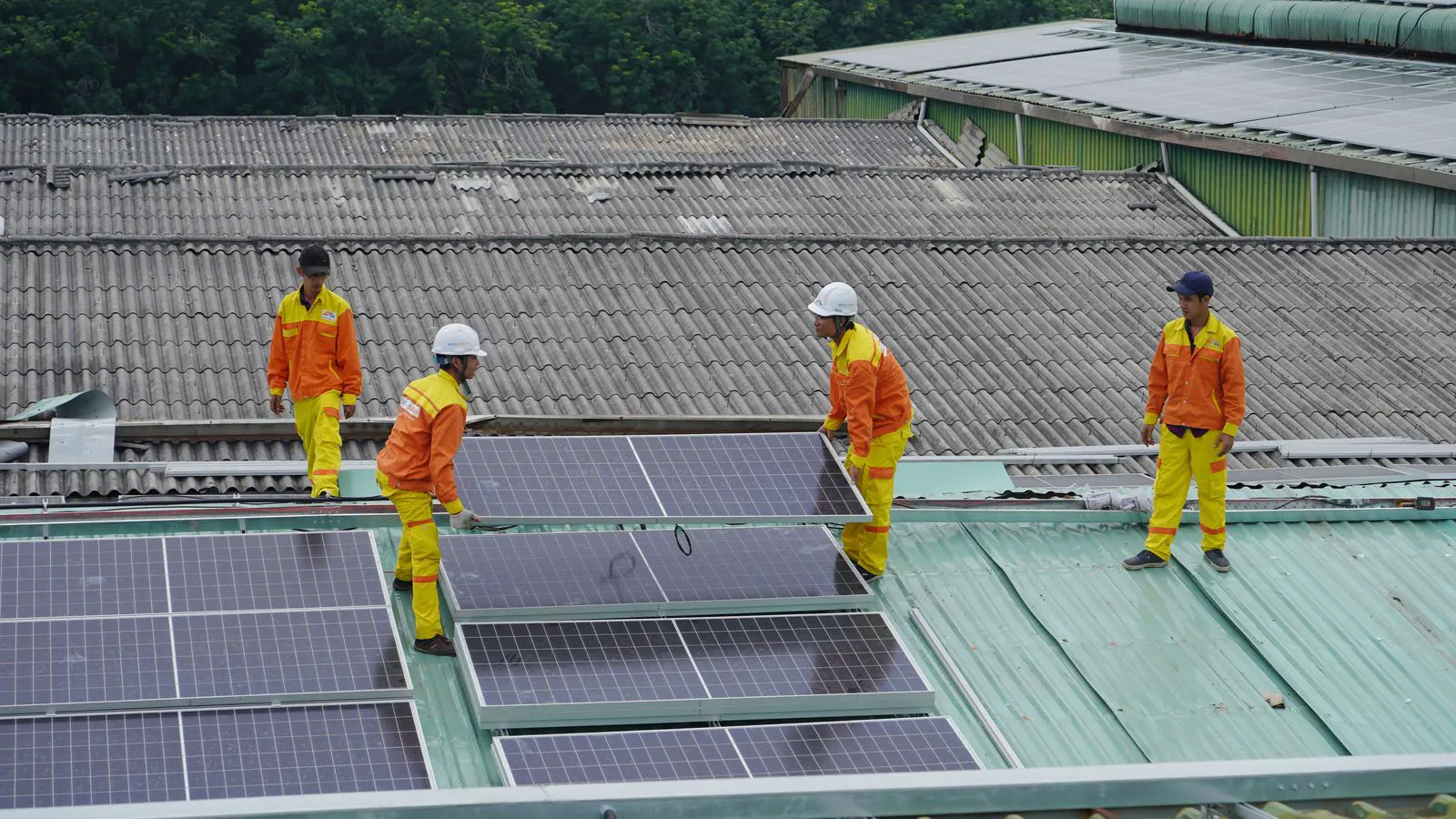
Both TOPCon and PERC panels install similarly. The mounting systems, wiring, and inverter connections remain the same. The main differences appear in the expected performance data.
Monitoring systems should capture both voltage and current readings over time. This helps verify that the panels are performing as expected. If TOPCon panels underperform relative to their rated specifications, the issue likely lies in wiring, shading, or inverter configuration rather than the cell technology.
Regular visual inspections are recommended for both types. Cracked cells, delaminated encapsulants, and connector issues affect performance regardless of cell design. Proper maintenance keeps either technology performing at its expected level throughout its service life.
Common Misconceptions
Some buyers assume that PERC is obsolete because TOPCon has higher efficiency. This is incorrect. PERC remains a valid technology choice for many applications. The efficiency gap is not large enough to make PERC unsuitable for standard projects.
Another misconception is that TOPCon panels are always better. This depends on the specific project constraints. If roof area is abundant and budget is limited, PERC may provide better value. The “best” technology is the one that matches the project requirements.
Some people confuse cell technology with panel brand quality. A high quality PERC panel from a reputable manufacturer will outperform a low quality TOPCon panel. Panel integration, encapsulation quality, and frame design matter as much as the cell structure.
Final Thoughts on Technology Selection
The choice between TOPCon and PERC comes down to balancing efficiency gains against cost and availability. TOPCon offers higher efficiency, better temperature performance, and improved low light behavior. PERC provides lower upfront cost, wider availability, and proven reliability.
Professional buyers should evaluate their specific project parameters. Roof area, climate, budget, and timeline all influence the optimal choice. The technical differences are real, but the practical impact depends on how those differences interact with the project constraints.
Understanding the cell design technology helps buyers ask better questions of suppliers and engineers. It also ensures that the selected panel technology aligns with the long term performance goals of the installation.
Frequently asked questions
Does TOPCon technology require a different inverter than PERC?
No, both technologies work with standard inverters. The electrical output characteristics are similar enough that existing inverter specifications apply to both.
Can I mix TOPCon and PERC panels in the same array?
It is generally not recommended. Different cell technologies have different voltage and current characteristics, which can cause mismatch losses and complicate the inverter operation.
How much more efficient is TOPCon compared to PERC?
TOPCon cells typically achieve several percentage points higher efficiency than PERC cells of the same generation. The exact difference depends on the specific cell design and manufacturing process.
Are TOPCon panels more sensitive to temperature?
No, TOPCon panels generally have lower temperature coefficients than PERC panels. They lose less power when operating temperatures rise above standard test conditions.
Will PERC technology become unavailable in the future?
There is no indication that PERC will be discontinued soon. It remains a standard technology with established production lines and wide market availability.