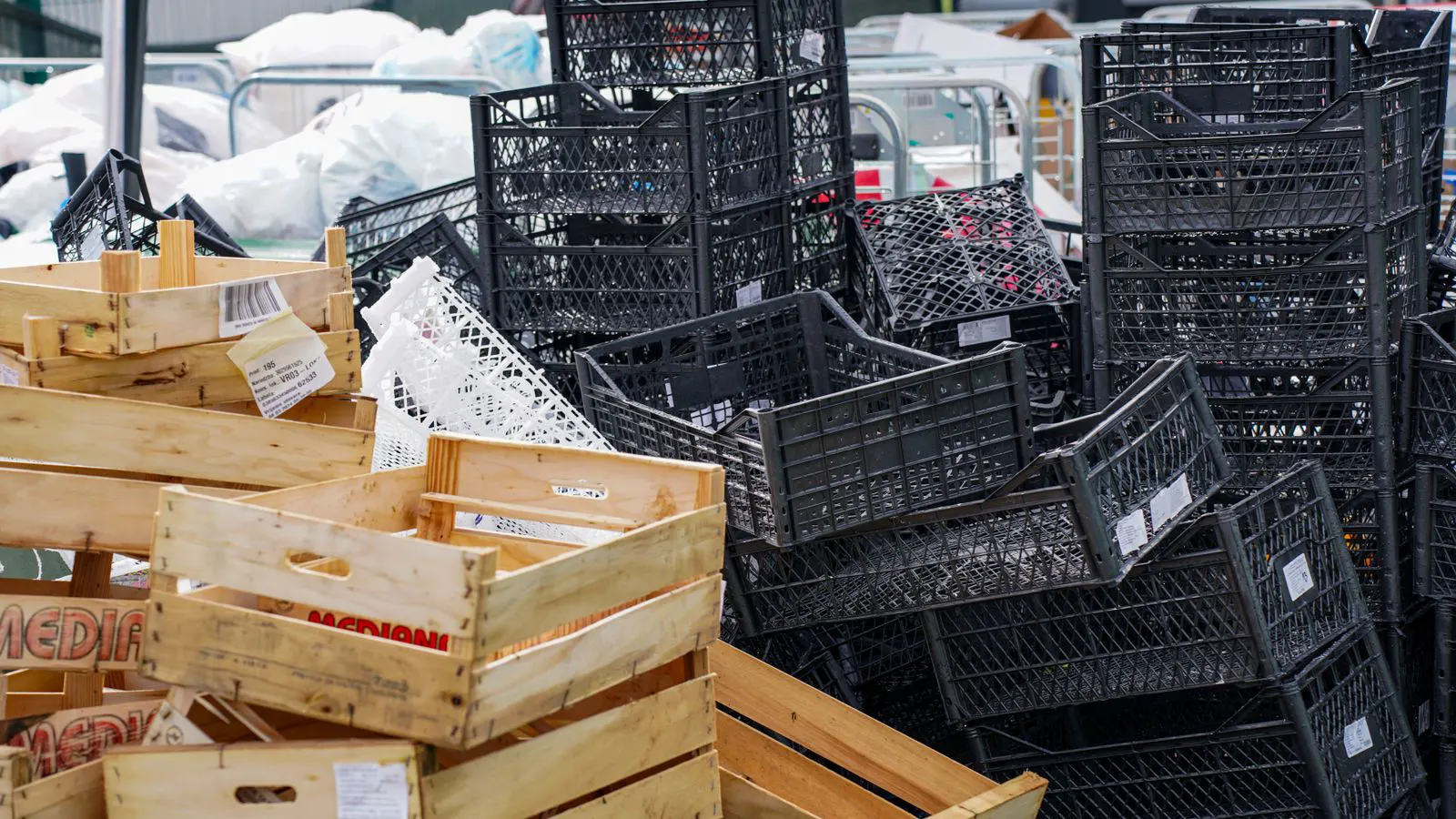
Wooden crates offer high protection and are ideal for fragile shipments, while plastic crates provide lighter weight and better cost efficiency for high-volume routes. The right choice depends on your specific logistics needs.
- Wooden crates provide superior structural support for fragile panels but add significant weight and cost.
- Plastic crates are lighter and reusable, making them cost-effective for high-volume, multi-leg shipments.
- The best crate material depends on your route's handling frequency and the panel's fragility.
- Reusable plastic crates often lower long-term costs for regular shipments.
- Consider your container loading method when selecting a crate type.
When does protection matter most?
Solar panels are built to withstand weather, but they are not designed for rough handling. During transit, panels face vibrations, compression, and sudden stops. The packaging must absorb these forces and keep the glass and frame from moving. The glass is the most vulnerable component because it is brittle and cannot flex. If the crate allows even slight movement, the glass edges can strike the metal frame or adjacent panels. This creates microfractures that may not be visible at the dock but can lead to delamination or electrical failure months later in the field.
Wooden crates are the heaviest option. They use thick lumber and corner blocks to create a rigid shell. This structure is excellent for absorbing impact. A wooden crate can withstand a hard drop without deforming because the wood fibers compress and distribute the force across a larger area. The internal supports, often made from plywood or solid timber, keep the panels separated and prevent them from sliding against one another. If a pallet jack forks the crate incorrectly, the wood can crack, but the panel itself usually remains intact because the crate absorbs the shock.
Plastic crates are lighter. They are molded from high-density polyethylene or similar resins. The material flexes slightly under stress, which helps dissipate energy. A plastic crate will not splinter if it hits a hard surface. Instead, it dents or deforms. This is useful for preventing sharp edges from cutting the panel frame or the protective film on the glass. However, because the material is less rigid, it requires careful design of the internal brackets. If the plastic frame is not stiff enough, the panels can shift during transit, and the impact energy is transferred directly to the glass.
The choice between the two depends on your route. If your shipment goes from a factory to a port with minimal handling, a lighter crate is sufficient. The panels move from a controlled environment to a container with limited stops. In this case, the primary risk is shifting rather than impact. A plastic crate with good internal bracing can handle this without adding unnecessary weight. If the panels move through multiple carriers and transfer points, the extra protection of wood may be worth the cost. Each transfer point increases the risk of rough handling. Forklifts may drop the crate, or it may be stacked incorrectly. Wood provides a higher safety margin in these chaotic environments.
How do the materials compare in a table?
| Option | Best for | Limitations |
|---|---|---|
| Wooden crate | Fragile panels, long routes with rough handling | Heavy, higher cost, not reusable |
| Plastic crate | High-volume shipments, lighter panels, multi-leg routes | Less rigid, may deform under extreme compression |
| Mixed crate | Balanced protection and weight | More complex to source, higher initial cost |
| Custom crate | Specific panel sizes, unique routes | High design and production cost |
Wooden crates are standard for export shipments that require high protection. They are also easy to stack and secure in a container. The lumber provides natural friction, which keeps the panels from sliding. When you stack wooden crates, the rough surface creates grip. This reduces the need for additional tie-downs or lashing, which can save time at the port. The corners of wooden crates are also reinforced with metal plates or thick timber blocks. These corners take the brunt of any impact during stacking or handling.
Plastic crates are gaining traction in the industry. They are lighter, which reduces fuel costs and allows more panels per container. The smooth surface is easier to clean and does not harbor pests. This makes them suitable for international shipping where biosecurity is a concern. The weight difference is significant. A wooden crate for a standard panel might weigh several kilograms more than a plastic equivalent. Over a full container load, this difference adds up. The extra weight increases the total mass of the shipment, which affects fuel consumption and handling requirements.
Mixed crates combine both materials. They use a wooden frame with plastic inserts. This offers a balance of strength and weight. The wooden frame provides the rigidity needed for stacking and impact protection. The plastic inserts absorb vibration and prevent direct contact between the panels and the wood. However, sourcing these crates can be difficult. They require specialized manufacturers who can produce the two-part assembly. The production cost is higher because two different materials and processes are involved.
What is the durability difference?
Durability is about how the crate holds up over time and under stress. Wooden crates are strong in compression but weak in impact. If a wooden crate hits a hard edge, the wood can crack or splinter. Once the structure fails, the protection is gone. The failure mode is sudden. A crate that looks intact from the outside may have an internal crack that compromises its ability to hold the panels. When the crate fails, the panels are exposed to direct impact.
Plastic crates are more durable in terms of lifespan. They can be reused many times without losing their shape. The material does not splinter or rot. However, plastic is less rigid. Under extreme compression, a plastic crate may deform permanently. This can affect the fit in the container or the protection of the panels inside. If a crate is crushed during loading, the internal brackets may bend. The panels might still be safe, but the crate will no longer function as a protective unit. It will not stack properly, and it may not fit in the container anymore.
The durability of the crate also depends on the handling. If the crates are dropped frequently, wood will fail faster. Wood is brittle. It does not forgive mistakes. If the same wooden crate is used for multiple rough shipments, it will show damage. The corners will chip, and the boards will split. If the crates are handled carefully, plastic will last longer. Plastic can withstand repeated drops without structural failure, provided the impact force is within its limits.
A wooden crate is a single-use item. It is often discarded after the shipment. It may be repurposed as firewood or construction waste, but it is rarely returned to the shipper. A plastic crate can be returned, cleaned, and reused. This changes the cost structure. The initial cost of a plastic crate is higher, but the long-term cost per shipment is lower. The durability of the plastic depends on the quality of the resin and the design of the mold. Low-quality plastic may crack at stress points after a few uses. High-quality plastic can last for years.
How do costs compare over time?
The cost of solar panel packaging is more than just the crate itself. It includes the weight, the space it takes, and the handling labor. Wooden crates are heavier. This means more fuel is needed to transport them. It also means the crate takes up more space in the container. You can fit fewer panels in a container with wooden crates than with plastic ones. The space efficiency is a major factor. A wooden crate has thicker walls and larger corner blocks. This reduces the internal volume available for the panels.
Plastic crates are lighter and often have a smaller footprint. This allows more panels per container. The reduced weight and increased capacity lower the cost per panel. For example, if a container holds 500 panels with plastic crates but only 480 with wooden crates, the cost per panel is higher for the wooden option. The difference in weight also affects the loading process. Forklifts can lift more weight, but the center of gravity is higher with heavier crates. This can make the stack less stable.
Over time, the reusability of plastic crates lowers the total cost. If you ship regularly, the cost per shipment drops significantly. You buy the crate once and use it for many trips. The amortized cost per panel decreases with each reuse. Wooden crates are a one-time expense. You buy them, use them, and throw them away. The cost per shipment includes the full price of the crate. If you are shipping only once, the cost difference may not matter. If you are shipping every month, the plastic option becomes significantly cheaper.
The cost difference is not just about the crate. It is about the entire logistics chain. A lighter crate means lower fuel costs, higher capacity, and potentially fewer handling points. It also reduces the wear and tear on equipment. Forklifts and pallet jacks work harder with heavier loads. This can lead to more maintenance costs for the shipping company. The total cost of ownership for a crate includes the purchase price, the transport cost, the handling cost, and the disposal or reuse cost.
What are the environmental impacts?
Wooden crates are made from natural materials. They are biodegradable, but the amount of wood used can be significant. The production of wooden crates involves cutting, drying, and assembling lumber. This requires energy and creates waste. The wood must be sourced from sustainable forests to minimize environmental impact. If the wood is not certified, the environmental cost is higher. The assembly process involves nails or screws, which add metal waste. Disposal of wooden crates is often in landfills, where they decompose slowly and release methane.
Plastic crates are made from petroleum-based resins. They are not biodegradable, but they are recyclable. The production of plastic crates involves molding, which is efficient and creates less waste than cutting wood. The molding process uses precise molds, which reduces off-cuts. However, the raw material is non-renewable. The environmental impact depends on the source of the plastic. Virgin plastic has a higher carbon footprint than recycled plastic. Many manufacturers now use recycled high-density polyethylene, which lowers the environmental impact.
The environmental impact depends on the lifecycle. A wooden crate has a short life and a higher material impact. A plastic crate has a long life and a lower material impact per use. If a wooden crate is used once and discarded, its environmental footprint is higher than a plastic crate used ten times. The reuse factor is the key variable. If the plastic crate is not reused and is thrown away, the environmental advantage disappears.
If you are shipping internationally, biosecurity is a factor. Wooden crates can carry pests and diseases. Many countries require heat treatment or other measures to prevent the spread of pests. This adds cost and time to the shipping process. The crates must be treated to kill any insects or eggs that may be present. If the treatment is not done correctly, the shipment can be held at the port. This causes delays and additional costs.
Plastic crates do not have this issue. They are easier to clean and do not harbor pests. This simplifies the export process and reduces the risk of delays. The smooth surface can be wiped down with disinfectant. There is no wood to rot or harbor bacteria. This makes plastic crates more hygienic and more compliant with international shipping regulations.
When should you pick wooden crates?
Choose wooden crates when protection is the top priority. If your panels are fragile or if your route involves rough handling, wood is the better option. Wooden crates provide a rigid barrier that absorbs shock. They are better for panels with thicker glass or more complex internal structures that are sensitive to vibration. The wood also provides better insulation against temperature changes. This is important if the shipment is in a region with extreme heat or cold.
Wooden crates are also better for long-term storage. They provide a stable environment that protects the panels from moisture and temperature changes. If the panels are stored in a warehouse for several months, a wooden crate can protect them from condensation and dust. The wood can be sealed with a protective coating to improve moisture resistance. If the storage conditions are poor, plastic may not provide enough protection. The wood can be modified to add ventilation holes or additional supports.
If you are shipping to a region with strict biosecurity regulations, wooden crates may be required. Some countries have specific rules about the type of packaging used for solar panels. They may require wooden crates for certain types of cargo, or they may require the crates to be heat-treated. If the regulations are not met, the shipment will be rejected. It is safer to use wooden crates if there is any doubt about the regulations.
Wooden crates are also easier to modify. You can add custom padding or supports to fit specific panel sizes. This makes them a good choice for one-off shipments or custom orders. If you have a small batch of panels with unusual dimensions, you can build a custom wooden crate to fit them exactly. Plastic crates are usually standardized, and custom plastic molds are expensive. Wood can be cut and shaped easily, making it more flexible for small batches.
When should you pick plastic crates?
Choose plastic crates when cost efficiency and reusability are the top priorities. If you ship regularly, the long-term savings from plastic crates can be significant. The initial cost is higher, but the cost per shipment drops with each reuse. If you ship the same route every month, the plastic crate becomes a capital asset rather than an expense. You can track the crate and ensure it is returned and maintained.
Plastic crates are lighter, which reduces fuel costs and increases capacity. This is ideal for high-volume shipments. If you are shipping full containers, the weight difference can save a significant amount of fuel. The increased capacity means you can ship more panels per container, which lowers the cost per panel. For large scale projects, this efficiency is a major benefit.
Plastic crates are also easier to handle. They are lighter and have smooth edges, which reduces the risk of injury to workers. Forklifts can handle more crates per trip because they are lighter. This increases the throughput at the warehouse. The smooth surface also means that the crates can be moved more easily. They do not stick to the floor or to each other.
If you are shipping to a region with strict biosecurity regulations, plastic crates are a better option. They do not require heat treatment or pest control measures. This saves time and money. The crates can be cleaned and reused without the risk of carrying pests. This makes the logistics chain smoother and more predictable.
Plastic crates are also better for short-term storage. They are lighter and easier to move, which makes them suitable for warehouses and distribution centers. If the crates need to be moved frequently, plastic is the better choice. The lightweight nature of the crate makes it easier to handle by hand or with small equipment. This reduces labor costs and increases efficiency.
What are the common mistakes?
A common mistake is choosing a crate based only on the initial cost. The total cost includes weight, capacity, and reusability. A cheaper crate that is heavier and single-use may cost more in the long run. You need to calculate the total cost of ownership, not just the purchase price. This includes the transport cost, the handling cost, and the disposal cost. If you ignore these factors, you may end up with a more expensive shipment than you thought.
Another mistake is not considering the route. If your route involves rough handling, a lighter crate may not be sufficient. You need to protect the panels from damage. If the panels are damaged in transit, the cost of replacement and repair is much higher than the cost of a better crate. You should evaluate the handling practices at each transfer point. If the handling is rough, you need a crate that can withstand it.
A third mistake is not considering the container. The crate must fit the container and the loading method. A crate that is too large or too small can cause problems during loading and unloading. If the crate is too large, it will not fit in the container, or it will leave gaps that cause the panels to shift. If the crate is too small, it will not provide enough protection. You should measure the container and the loading area to ensure the crate fits properly.
The best crate is the one that fits your specific route and shipment. There is no one-size-fits-all answer. You need to evaluate your needs and choose the crate that offers the best balance of protection and cost. Consider the weight, the capacity, the reusability, and the environmental impact. By choosing the right crate, you can reduce costs and protect the panels during transit.
Frequently asked questions
Which crate material is better for fragile solar panels?
Wooden crates are generally better for fragile panels. They provide more structural support and can absorb impact better than plastic crates.
Can plastic crates be reused?
Yes, plastic crates can be reused many times. They are designed to be durable and do not splinter or rot.
Are wooden crates heavier than plastic crates?
Yes, wooden crates are significantly heavier than plastic crates. This affects fuel costs and container capacity.
What is the environmental impact of each crate type?
Wooden crates are biodegradable but use more material. Plastic crates are not biodegradable but are recyclable and have a longer lifespan.
How do I choose the right crate for my shipment?
Consider the fragility of the panels, the route's handling frequency, and the long-term cost. Wooden crates are best for fragile panels and rough routes. Plastic crates are best for high-volume shipments and regular routes.